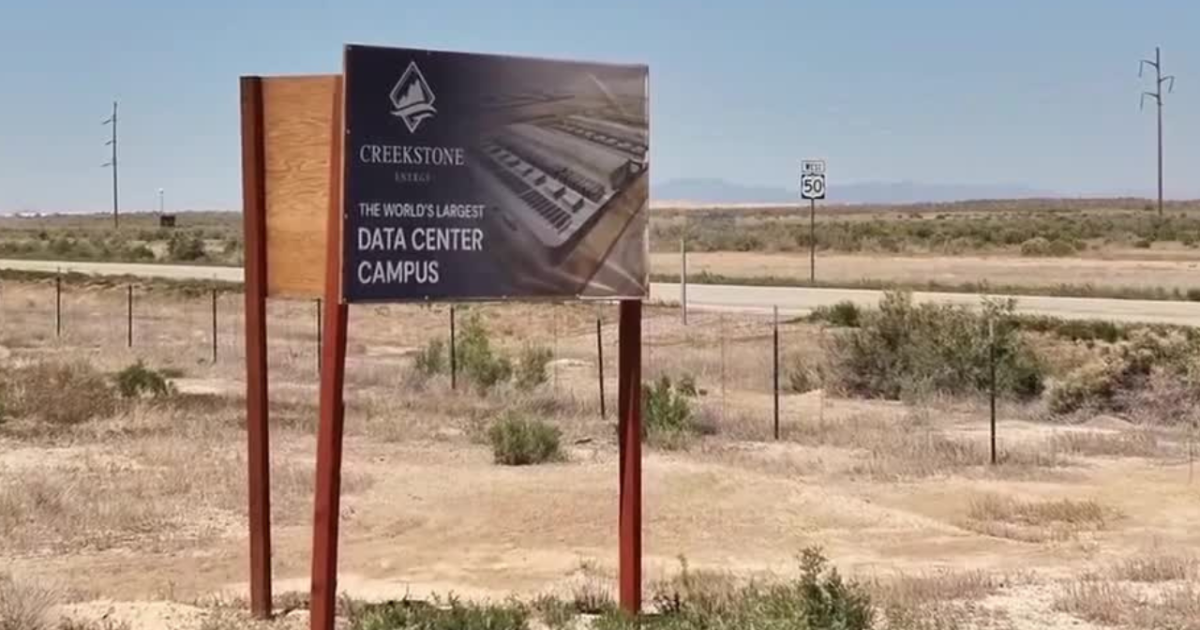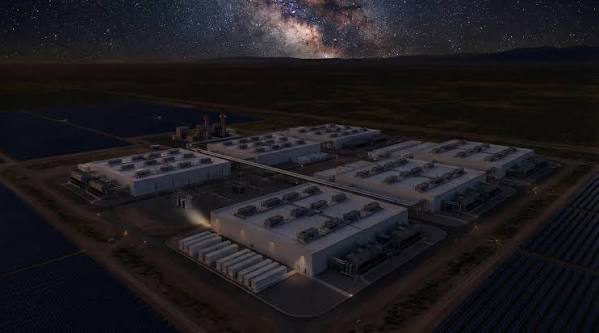
Creekstone Energy is developing what it claims is the world's largest data center campus in rural Millard County while pursuing a new water recovery technology, according to a September 9 report.
The project, referred to as the Delta Gigasite, has a capacity of 10 gigawatts and is located nine miles southeast of Delta. The company is working to implement a patent-pending technology called Project Oasis, which aims to recover water generated during natural gas combustion.
The water recovery process involves condensation from natural gas burning, which would condense into underground rock formations before being harvested into pools. According to CEO Ray Conley, the technology resembles vehicle exhaust condensation performed on a massive industrial scale. Once collected in tanks, the water could potentially be used for irrigation, geothermal energy cycles, or even drinking water if properly filtered.
Project Oasis is expected to potentially recover up to 4,000 acre-feet of water vapor per year. This could offset the project's estimated water consumption of 200 acre-feet at full capacity, potentially allowing the facility to return more water to the area than it uses.
The University of Utah's Energy and Geoscience Institute has been hired to conduct independent research to validate the viability of Project Oasis. This research will focus on determining water quality characteristics, such as acidity, and investigating the best ways to utilize the recovered condensation. Milind Deo of the University of Utah's Energy and Geoscience Institute stated that these technologies could revolutionize how the data center industry views water.
Millard County granted zoning changes and conditional use permits for the 1,143-acre campus in the summer of 2025. While natural gas infrastructure construction is currently underway, Conley stated the data center project will continue even if the water recovery results are unsuccessful. Initial research results from the University of Utah are expected by the summer of 2027.