There is no bill before the Utah Legislature to build or own an alpine ski resort. The campaign that has drawn statewide attention this month is a private nonprofit pitch, not a committee print. The Utah Public Ski Area Coalition, launched in September 2026 by Logan resident Clint Richins, wants the state to own the assets of a new resident-priced mountain and hire a nonprofit to run it. Its own September 2026 financial summary is explicit: every funding line is a request, not a commitment, and “no source has been secured.”
What has been secured, on a much smaller scale, is public money for a two-run hill in Fairview Canyon. That is the live Utah test of a publicly backed ski area, and it is already operating.
The $56 million state ask, still unfiled
The coalition’s Version 15 model, dated September 2026, prices a full build at $104.19 million, with $83.9 million in Phase 1 to open the mountain. Direct state exposure is listed as $56 million: a $38 million legislative appropriation plus $18 million in 30-year, revenue-backed general-obligation bonds, with the state guarantee described as a backstop only. Another $22 million is framed as a separate transportation appropriation for a 3-to-4-mile access road, not as resort debt.
The group says that mix is not a tax increase and would reinvest a fraction of the $342.6 million in state and local tax that skiing generated in the 2024-25 season. It also claims the $18 million bond would raise outstanding state general-obligation debt by about 2% from roughly $899 million; that debt figure is the coalition’s, not an independently audited state ledger in this reporting.
Year 1 is modeled at 80,000 visits and $7.62 million in revenue against $7.70 million in operating costs, a $536,000 net loss after a capital reserve. Stabilized volume is 170,000 visits around year 9. Ticket prices in the model are policy, not market: $59 for a Utah adult day ticket and $139 for an out-of-state adult, with a $15 school-program rate. The site is described only as an illustrative northern Wasatch location about 30 to 35 miles from Salt Lake City, on U.S. Forest Service land under a Special Use Permit, with no named canyon and no land purchase.
The plan’s own risk table is more cautious than the homepage. Water rights for snowmaking are unpriced and “could add roughly $2 to $6 million.” A new area on National Forest land requires full National Environmental Policy Act review, which the coalition says “routinely runs longer than the four-year window assumed here.” About $30 million of Phase 1 is enabling work — road, power, and permitting — before a lift turns.

Fairview already got the grant
Utah does not have to imagine a public ski hill. Snowland Ski Area, 7.8 miles east of Fairview on State Route 31, first opened in 1967, closed to public operations in 1980, and reopened as a public rope-tow hill on January 17, 2026, under the nonprofit Snowland Foundation. The Utah Outdoor Adventure Commission, meeting in early November 2025, awarded the project $1.46 million from the Outdoor Adventure Infrastructure Fund as part of $21 million for 38 recreation projects statewide. The official awards sheet lists “Snowland Recreation and Education Area,” applicant Snowland Foundation, Sanpete County, Central region, as new infrastructure.
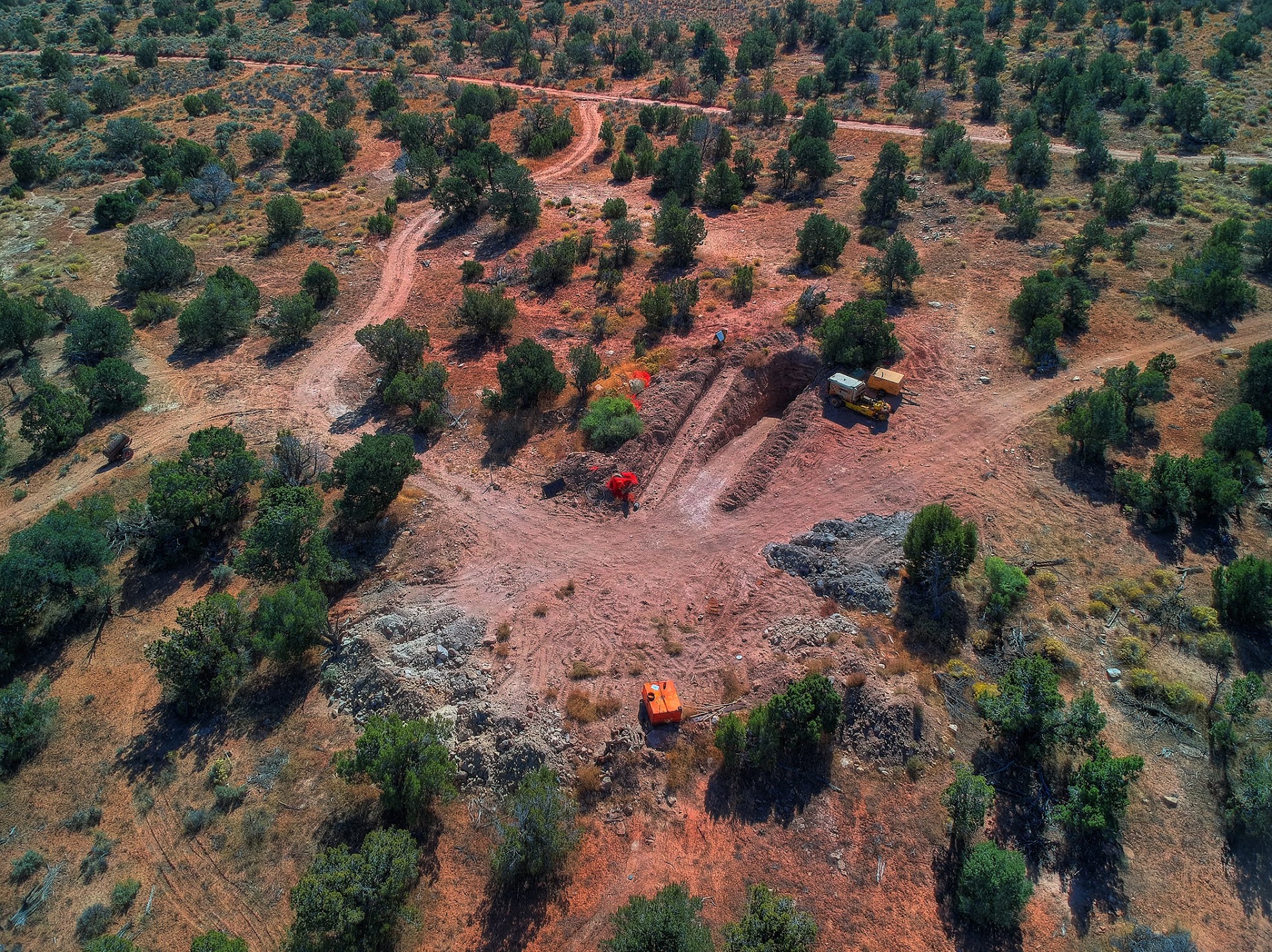
That grant sat on top of an earlier $1 million Utah Outdoor Recreation Grant used to restore the hill. Foundation chair Brent Lange told the Salt Lake Tribune the $1.46 million would go toward a surface lift, later planned for installation in the 2026-27 season. Snowland’s own site now says construction of that lift is to begin in October 2026, with 2026-27 ticket prices to be posted around December 1, 2026, and children ages 0-11 skiing free. Former Utah Senate President Wayne Niederhauser was photographed at the Fairview Canyon site on August 12, 2025, as volunteers and Wasatch Academy students cleared the two runs by hand.
The Outdoor Recreation Initiative that funded Snowland was created in 2023 under House Bill 224 and is administered by the Utah Division of Outdoor Recreation. Patrick Morrison, the division’s recreation program director, said the 2025 awards were “investments in Utah’s future” and that regional recreation councils — local leaders, land managers, and county tourism staff — rank projects before the Outdoor Adventure Commission gives final approval. Eligible uses include new construction, land acquisition, and environmental-compliance costs, and the program has funded multiple feasibility studies.
The coalition says it is applying to that same Outdoor Recreation Initiative for a feasibility study, not for construction. The 2026 ORI application window ran from July 15 through September 15, 2026, and closed three days before this article. Whether a complete application was filed by that deadline is not confirmed in public records reviewed for this story. The next Utah Outdoor Recreation Grant cycle is listed as January 11 to March 15, 2027.
Utah already runs a larger public winter venue of a different kind. Soldier Hollow, inside Wasatch Mountain State Park above Midway, was built for the 2002 Olympic biathlon and cross-country events and is operated by the Utah Olympic Legacy Foundation as a public Nordic center, tubing hill, and golf complex. It is assigned again for biathlon, cross-country skiing, Nordic combined, and the parallel Paralympic events at the 2034 Winter Games. Wasatch Mountain State Park recorded 830,939 visits in 2025, up 3.8% from 2024. That is public winter sport as the state already practices it: Nordic and tubing on park land, not a 1,000-acre alpine resort.
The winter that broke the visitation record in reverse
Any public alpine model would have to survive the winter Utah just finished. The Kem C. Gardner Policy Institute’s August 2026 tourism report counted 4.8 million skier days in 2025-26, a 26.5% drop from 6.5 million in 2024-25, after what the institute called a record-low snow season. Skier spending fell 17.8% to $2.1 billion, while spending per skier rose 12% to a record $392. International skier visits fell to about 85,000, or 2% of the total.

The year before, 2024-25, still produced $2.51 billion in skier and snowboarder spending, $342.6 million in state and local tax, and 31,800 direct jobs, with 43% of visits from Utah residents and an average skier age of 48. Jennifer Leaver, senior tourism analyst at the Gardner Institute, called that season proof of the industry’s resilience. Ski Utah President and CEO Nathan Rafferty said the same numbers showed skiing remaining “one of the state’s most powerful economic engines” heading into 2034.
The coalition stress-tested its mature-year model against a 25% visit drop, close to last winter’s actual decline. Because about 47% of modeled visits are pre-sold season passes, revenue falls about 18% rather than 25%, debt-service coverage dips to about 0.57 times, and a capital reserve of about $2.8 million by year 5 is supposed to cover a $643,000 shortfall. The summary’s own warning is that back-to-back low-snow years, not a single bad winter, are the real default risk.
Private capital is moving the other direction. Alterra Mountain Company said on September 9, 2026, that it will invest more than $350 million companywide for winter 2026-27, including Deer Valley’s Hail Peak Express, 200 more skiable acres, and seven new runs, taking that Park City-area resort to 32 chairlifts and 4,500 acres. Gardner’s 2026 report noted Deer Valley had already more than doubled its terrain in 2025-26, from about 2,050 to 4,300 acres. That is new supply, but it is luxury supply, not a $59 resident hill.
The closest American operating parallel is New York, which owns Whiteface, Gore, and Belleayre mountains through the Olympic Regional Development Authority, created to manage 1980 Lake Placid Olympic venues. Those are full alpine resorts with state ownership, Olympic legacy governance, and ongoing capital from Albany. Utah’s Olympic legacy, by contrast, is Soldier Hollow, the Oval, and Utah Olympic Park, not a new Forest Service ski area.
What has to happen before a lift is even permitted
A search of 2025 and 2026 Utah session records for a bill that would authorize, appropriate, or study a state-owned alpine ski area did not turn up one. Related winter-sports statutes that did pass, including 2025’s Olympic-legacy liability rewrite, address operator lawsuits, not ticket prices or public ownership. County commissioners have not gone on the record, in documents reviewed for this story, about carrying $56 million of state exposure for a new Wasatch alpine area. The land-use fight that would follow any named site is also untested: the coalition has not disclosed candidate drainages, and a Forest Service Special Use Permit plus NEPA is a multi-year federal process even if the Legislature later writes a check.
The coalition’s own next-step list is a site-screening study, a licensed feasibility study, a water-rights search, a transportation conversation about the access road, and then “the legislative vehicle and the governance structure.” The soonest regular place for that vehicle is the 2027 general session. Until a sponsor files a bill, Utah’s public-ski experiment remains the one already on the mountain in Fairview, not a $104 million resort that exists only in a spreadsheet.