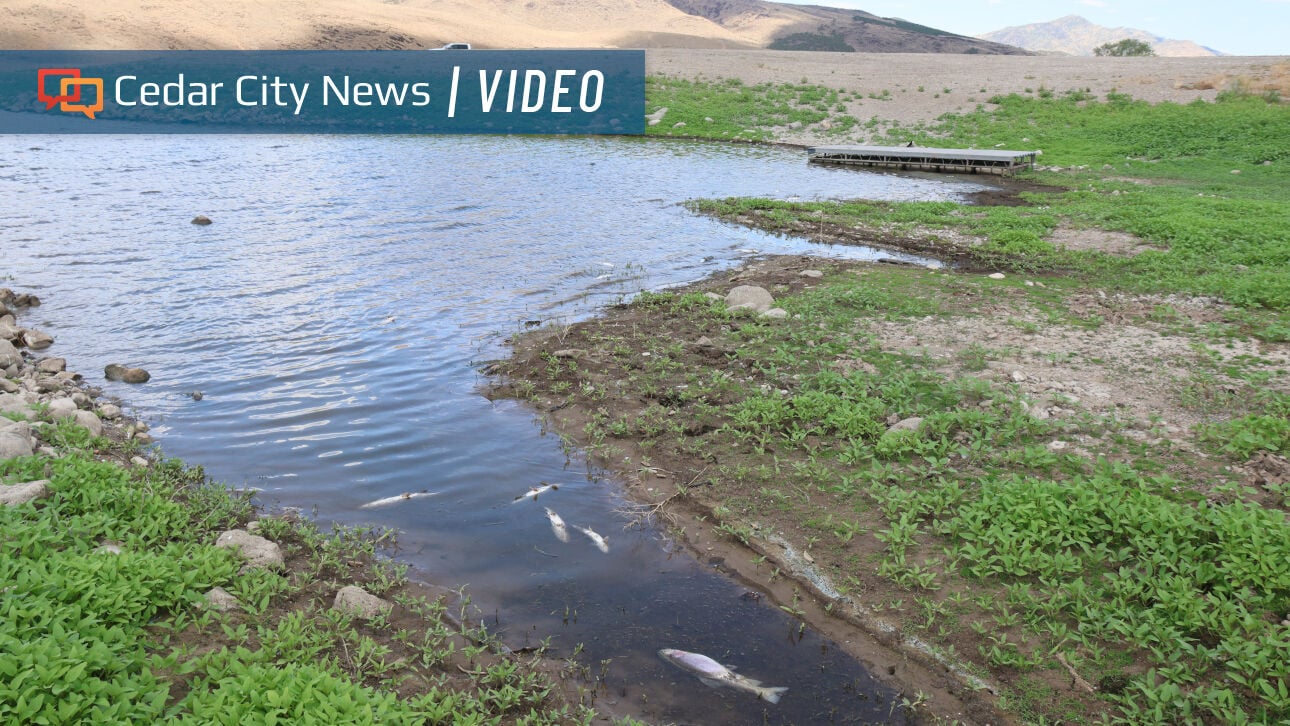
Flash flood runoff has killed an estimated 2,500 trout at Minersville Reservoir in Beaver County, according to wildlife officials.
Hundreds of dead fish were observed along the southeast shoreline of the reservoir last week, marking another impact from flash floods that have affected various areas of Beaver County.
Nic Braithwaite, an aquatics biologist with the Utah Division of Wildlife Resources, stated that the die-off was likely caused by ash, sediment, and debris washed into the reservoir by a sudden thunderstorm on July 19. This runoff occurred over the Cottonwood Fire burn scar.
Braithwaite explained that the added debris reduced oxygen levels in the water. This was particularly impactful because the reservoir was already facing a tough drought year, and trout require cool water with high oxygen levels to survive.
While many dead trout, primarily larger fish weighing between 1 and 3 pounds, were found near the boat ramp and camping areas on the southeast shore, Braithwaite noted that most of the dead fish were concentrated in the southwest area near the dam. He observed that some fish in other parts of the lake were still swimming and behaving normally.
The die-off primarily affected trout, while other species like largemouth bass, smallmouth bass, and wiper remained unaffected because they can better tolerate warmer water and lower oxygen levels.
Braithwaite noted that the reservoir has a population of approximately 40,000 trout, which is roughly equivalent to the number stocked annually. He suggested that while the population may experience a lower count next year, it is expected to recover in the long term.
Despite the fish die-off, officials stated the water at the reservoir remains safe for recreation. The reservoir remains open for fishing, camping, and other activities. Braithwaite cautioned that officials will continue to monitor the situation, noting that further flooding could cause additional fish to die.