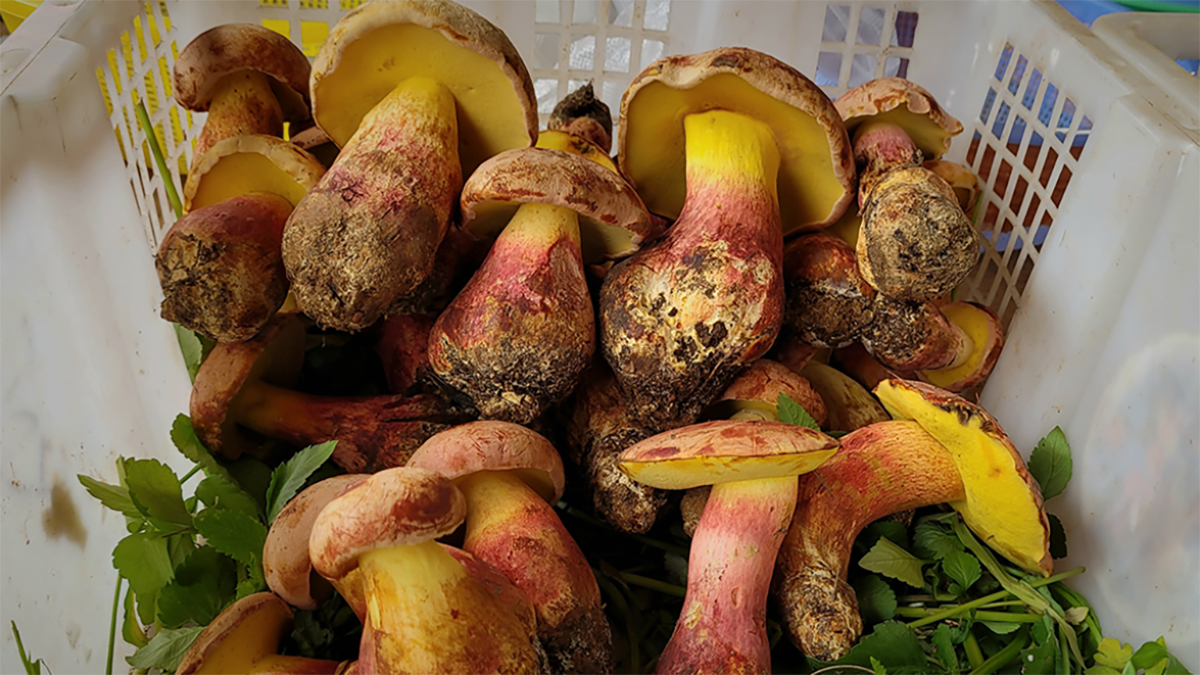
Studying the Lanmaoa asiatica Mushroom
University of Utah researchers are studying a psychedelic mushroom that causes users to see "whimsical little fairies and elves" in their real-world environment, a phenomenon that has baffled scientists for decades. The research, conducted at the Dentinger Lab within the Natural History Museum of Utah, focuses on Lanmaoa asiatica, a mushroom that produces consistent hallucinations of tiny people.
Visualizing Tiny People
Colin Domnauer, a doctoral student at the University of Utah's School of Biological Sciences, is leading the investigation into the mushroom's properties. His research focuses on the specific hallucinations caused by the species, which users describe as seeing dozens or hundreds of energetic, brightly colored little people climbing on furniture or marching across tablecloths. Unlike many other hallucinogens, these visions are not closed-eyed hallucinations but are perceived as being part of the user's physical environment.
Searching for New Compounds
The research aims to identify the specific chemical compound responsible for these effects. According to Domnauer, initial lab testing has already ruled out psilocybin, the common compound found in traditional "magic mushrooms." This suggests the lab may be on the verge of discovering an entirely new hallucinogen. The Dentinger Lab is currently utilizing genome sequencing to decode and analyze the genetic material of the mushroom to classify these compounds.
A Common Edible with Side Effects
The mushroom, known locally in China as "Jian shou qing," is a common food item found in markets. Domnauer reported experiencing the mushroom at a hot-pot restaurant in China, noting that while the mushroom is delicious, it requires a 15-minute timer to avoid inducing hallucinations. In the Yunnan Province of China, researchers have noted that while locals frequently experience these hallucinations, there have been no reported deaths or organ damage from the fungus, leading many to describe it as a food that simply has a side effect.
A Long History of Mystery
The phenomenon of "lilliputian hallucinations"—a clinical term for seeing small people—has been documented in multiple regions for nearly a century. As Davis County News first reported, the first reports emerged in 1934 when missionaries in Papua New Guinea observed locals experiencing striking changes in mood and behavior after eating a mushroom called "nonda." In the 1960s, mycologists traveled to the region to test the mushrooms but concluded the effects were a hoax when they failed to find active compounds. However, independent reports from southern China have since confirmed the same hallucinogenic effects.
Ancient Cultural Roots
The taxonomic identity of the mushroom was only recently confirmed. According to University of Utah records, the species was officially described as Lanmaoa asiatica after mycologists in Yunnan sequenced samples purchased from open-air markets. Interestingly, the mushroom is more closely related to the common porcini than to other known hallucinogenic species. While the scientific community is only now catching up, historical texts suggest the mushroom has deep roots in Chinese culture; a 3rd-century CE Daoist text refers to a "flesh spirit mushroom" that allows a person to see a little person.
Challenges to Research
Despite the potential therapeutic applications for depression and anxiety, researchers face significant hurdles. Bryn Dentinger, the director of the Dentinger Lab, noted that funding remains the primary barrier to research, as it is difficult to secure investment for a mysterious substance with unknown properties. The research comes at a time of increasing national interest in psychedelics, following a presidential executive order on April 18 that directed $50 million in federal funds toward making psychedelic drugs more accessible for mental health treatment.
Global Research Scope
The study of Lanmaoa asiatica is one of only two labs worldwide currently conducting such research. Domnauer noted that the research began after he decided to follow anecdotal reports rather than dismissing them as hoaxes. The study continues to investigate how the mushroom's effects vary across different regions, including reports from the Philippines regarding a similar mushroom known locally as "ansisit."