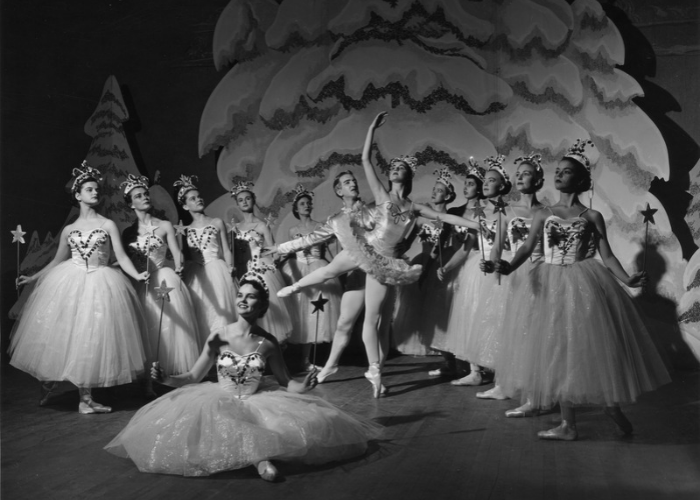
A story published October 28 explains how Utah native and choreographer Willam Christensen created America's first full-length Nutcracker during World War II. Known as "Mr. C," Christensen produced the work in 1944 to bring joy during the wartime era.
To mount the production in the fall of 1944, Christensen faced significant material shortages due to wartime rationing. He mortgaged his house and collaborated with his brothers, Harold and Lew, to fund the project. The production utilized red velvet curtains from a demolished theater for party coats and relied on dancers to pool fabric limited to 10 yards per person. This effort resulted in 143 costumes designed and built by 19-year-old company member and painter Russell Hartley on a $1,000 budget.
The production's success was immediate, selling out every seat in the 3,300-seat San Francisco War Memorial Opera House. Because many male dancers were serving overseas, Christensen cast children in leading roles, a practice that became a standard feature for Nutcracker productions across the country. While Christensen's version was uniquely American, it was inspired by discussions with George Balanchine and Alexandra Danilova regarding the version they performed as children in St. Petersburg, Russia.
Ballet West's production of the original 1944 work was brought to Utah in 1955. In 2024, the state of Utah recognized the production as a Living Historic Landmark, marking the first such designation in the United States. Ballet West's Nutcracker is scheduled to run Dec. 4 – 26 at the Janet Quinney Lawson Capitol Theatre in Salt Lake City.
Ballet West, led by Artistic Director Adam Sklute, has been operating in Salt Lake City since 1963. The company includes the Frederick Quinney Lawson Ballet West Academy and manages one of the largest outreach and education programs in the country.