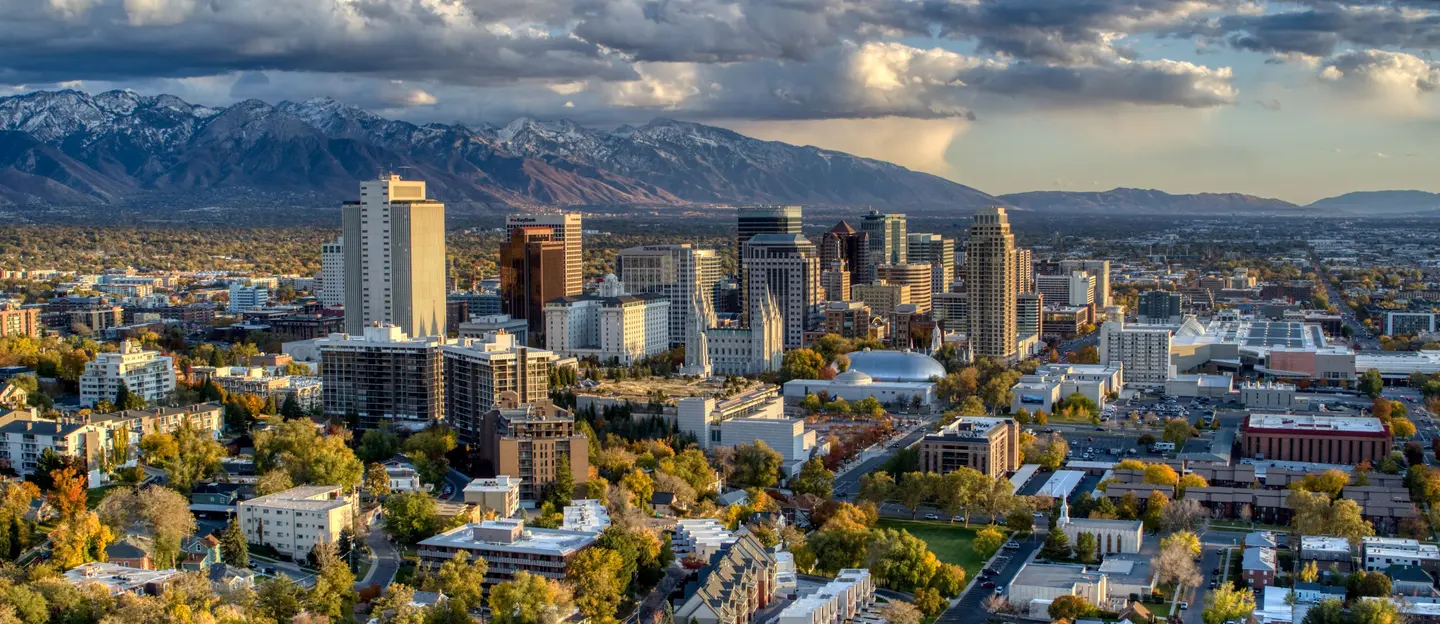
The Salt Lake City multifamily market strengthened during the second quarter of 2026 as demand absorbed a slowing wave of new supply. Nine of the 11 submarkets in the metro area recorded vacancy compression from the previous quarter.
Vacancy compression was led by West Jordan, South Jordan/Riverton, and Orem, where construction activity has remained comparatively limited. These improvements have been supported by a local labor market that added 12,000 jobs during the past 12 months.
Rents posted their largest quarterly increase in years during the second quarter, helping return rent levels closer to year-earlier levels. However, Downtown Salt Lake City was the clearest outlier, posting the region's highest vacancy and accounting for roughly one third of the metro's vacant units.
Investment activity across the Wasatch Front was shaped by two distinct buyer profiles during the second quarter. A handful of larger, newer-vintage trades pushed the year-to-date average price to $230,200 per unit.
Private buyers continued to anchor deal volume in older properties. Half of the second quarter's transactions involved Class C assets built before 1990, with most trading below $4 million across secondary markets including Logan, Provo, and Ogden.
The remaining development pipeline is expected to keep vacancy elevated in the near term, with the rate expected to edge up to 7.1% by year-end as construction in Downtown Salt Lake City continues to deliver and lease-up.
Multifamily permitting has fallen well below its 10-year average. With fewer projects breaking ground, the pipeline feeding 2027 is thinning quickly. Asking rents are projected to finish the year near $1,600 per month.
Investment activity is expected to gain steadier footing over the remainder of 2026 as a thinning construction pipeline and firming rents provide owners greater visibility into future income growth and occupancy trends.