Rowland Hall upper schoolers explored a wide range of college-level topics through the school's Advanced Research program during the 2025–2026 school year, according to a report published May 7.
Launched in 2023–2024, the program allows students to dive deeply into chosen topics and contribute to broader scholarship. The most recent year included research conducted across five distinct classes: AR Biology, AR Chemistry, AR Computational Sciences, AR Humanities, and AR Physics.
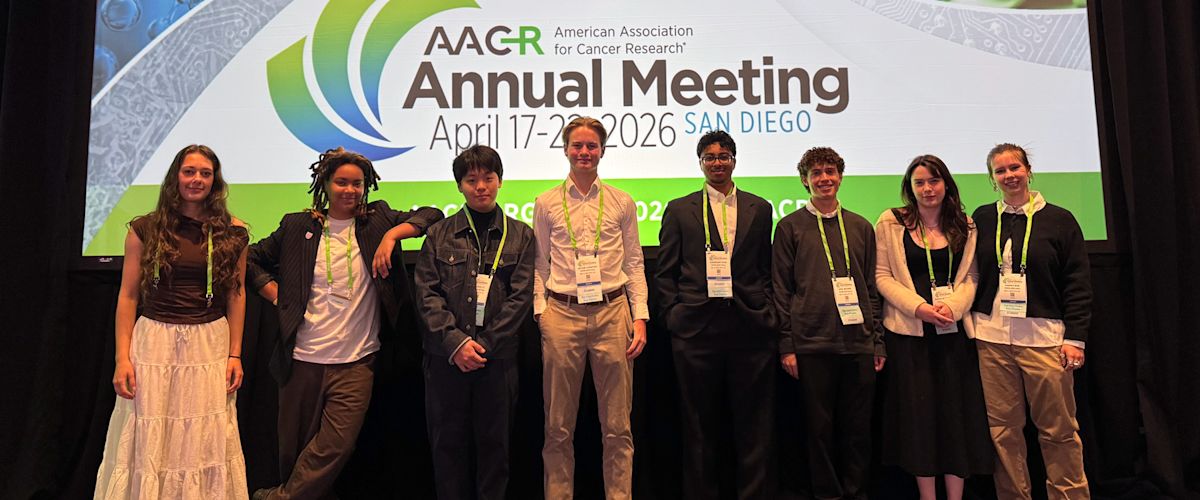
In the AR Biology program, eight seniors conducted research under the guidance of Dr. Padmashree Rida. Findings from four research projects were shared publicly at the American Association for Cancer Research’s Annual Meeting in San Diego from April 17–22.
Projects in this category included research on molecular docking to identify plant-based compounds for treating breast cancer and endometriosis, as well as studies on the use of self-identified race in research and the effects of the protein DARC/ACKR1 on tumor growth. One student, Samuel Lu, placed second in the Medicine & Health Sciences category at the University of Utah Science & Engineering Fair and qualified for the 2026 Regeneron International Science & Engineering Fair.
The AR Chemistry class, led by Tascha Knowlton, featured eight seniors working on projects focused on sustainability. These students presented findings at the American Chemical Society’s Spring Meeting in Atlanta from March 22–26.
Research topics included using soybean-induced carbonate precipitation for dust suppression, creating biocomposite paper from biowaste, and studying microbial biofertilizers. One project, conducted by Asher Orenstein and Samantha Wright, placed first in the Chemistry & Biochemistry category at the University of Utah Science & Engineering Fair and was selected for the GENIUS Olympiad.
The AR Computational Sciences and AR Physics programs both featured students working alongside professional mentors. In Computational Sciences, students studied topics such as cadmium distribution in solar cells, sentiment analysis in AI, and the impact of game design on aggression.
In the inaugural year of AR Physics, students under the guidance of Robin Hori conducted research on automated table recognition, the stability of the Pluto-Charon system, and cycling aerodynamics. All three physics projects earned awards at the University of Utah Science & Engineering Fair.
The AR Humanities program included 13 seniors who developed independent research papers. These students presented their work at an in-house conference on December 9, 2025.
Research topics ranged from the portrayal of Fleetwood Mac members in media to the role of music as resistance in the Black Panther Party. Other topics included urban planning in South Jordan, Utah, and the history of the Deaf community in Martha's Vineyard.