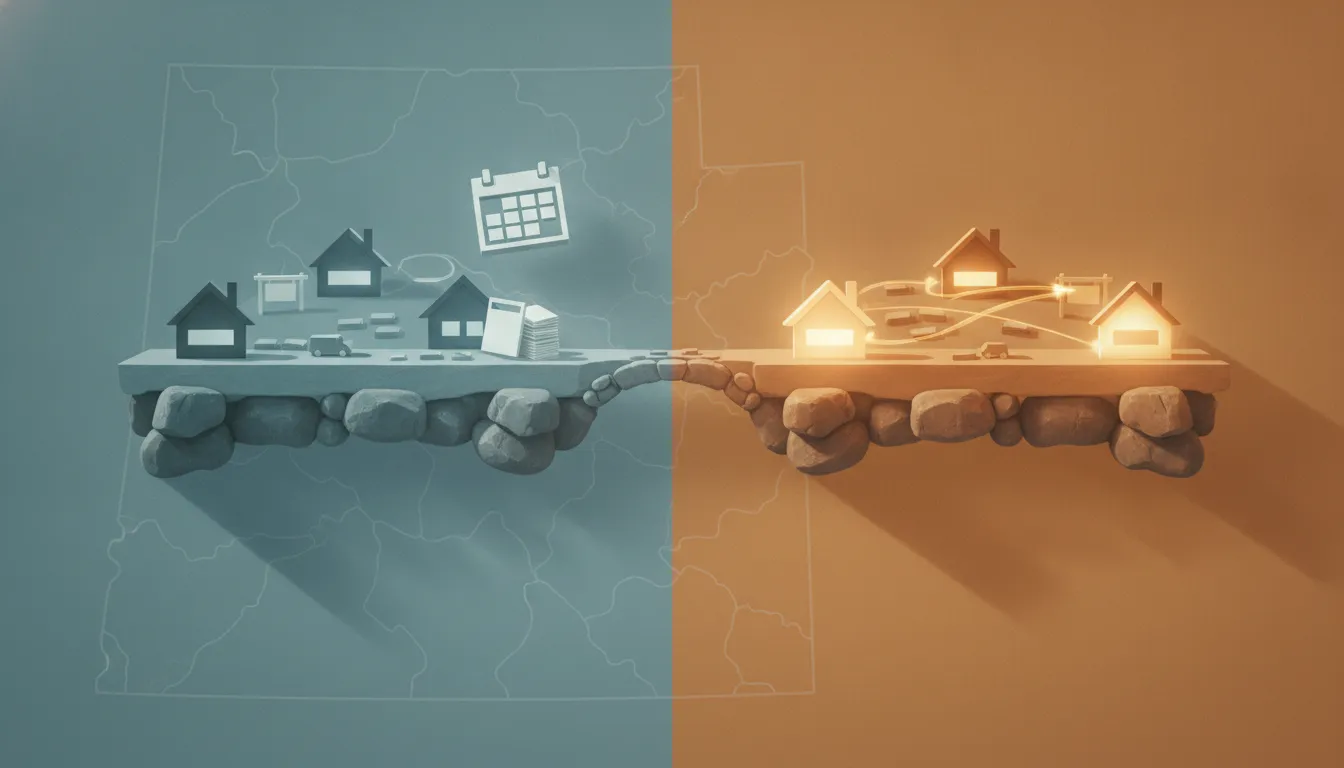
Utah's housing market is characterized as a stalled and split market in a report published September 14, 2026. While inventory has grown and sales activity has softened, statewide median sale prices in the state's largest county remained near $570,000, representing an approximate 3.5% increase from the prior year according to spring 2026 market figures.
Current conditions do not resemble a broad statewide housing crash because many homeowners hold significant equity and hold mortgages with interest rates below 4%. This financial position allows many owners to wait rather than accepting steep discounts, which limits the number of distressed listings. Instead of a rapid price collapse, the market is seeing a rise in withdrawn listings, where unmotivated sellers remove homes from the market rather than negotiating prices.
Market conditions vary by region. In Utah County, including areas like Lehi and Eagle Mountain, technology employment and population growth support demand, though rapid construction creates competition in outer suburbs. Salt Lake County contains diverse markets ranging from the Draper bench to West Valley City. Resort-oriented areas like Park City and Deer Valley are driven by lifestyle demand and are less sensitive to mortgage rate changes. Southern Utah remains a major relocation destination, though conditions differ between St. George and Hurricane.
New legislation is also impacting ownership costs. House Bill 48 took effect on January 1, 2026, implementing updated wildfire risk mapping and a mitigation fee for structures in designated high-risk wildland urban interface areas. This fee ranges from $20 to $120 annually. Additionally, statewide homeowners insurance premiums have risen by roughly 59% since 2021.
Experts suggest buyers should monitor months of supply, days on market, and price concessions to identify soft submarkets. Sellers are advised to price homes against current active competition rather than past sales to avoid stale listings.