Rocky Mountain Power still has not publicly named a cause for the Sept. 18 outage that cut power to 4,373 customers in Eagle Mountain. An outage-alert feed listed the event in the Eagles Gate area, with the alert issued at 7:53 p.m. and a restoration estimate of 1 a.m. Sept. 19. ABC4, citing the utility’s outage map that evening, reported restoration was not expected until 3:30 a.m. Sept. 19.
By about 5:15 a.m. Sept. 19, an independent outage tracker showed only 18 Rocky Mountain Power customers without power in Utah County, indicating the mass Eagle Mountain event had ended overnight. What remains unanswered is why it happened. The same alert feed listed the cause as unknown.
That gap matters because Eagle Mountain has now seen repeated, thousand-customer outages in a city adding residents faster than the local grid has been able to stay quiet — and Utah’s utility watchdog has told the Public Service Commission that Rocky Mountain Power is not making progress on the single biggest driver of those interruptions: equipment failure.
A documented pattern, not a one-off
The Sept. 18 event is at least the fifth time since November 2025 that more than 2,700 Eagle Mountain customers have lost power at once.
On May 11, Rocky Mountain Power reported about 2,706 customers out and later confirmed a transformer problem; crews switched most customers to backup power, with about 1,000 still dark late that evening. FOX 13, covering the same transformer failure, said a damaged transformer at a substation hit customers in ZIP codes 84005 and 84013 and that crews rerouted most load onto a different transformer, with full restoration by 10 p.m.
On June 5, the utility listed about 2,746 customers out, with restoration estimated at 11:30 p.m. Eagle Mountain officials said streetlights were dark along Pony Express Parkway, and Rocky Mountain Power said the cause was under investigation after the outage was first reported at 6:55 p.m.
On Nov. 10, 2025, 4,648 customers were out; the cause was listed as unknown even after crews responded. Nine days later, on Nov. 19, 2025, Rocky Mountain Power spokesman Jonathan Whitesides told ABC4 that “a circuit that opened” — a trip at a substation — took out 8,628 customers at 3:38 p.m. for about 15 minutes.

Larger hits go back further. On Aug. 30, 2024, 21,837 customers in Cedar Fort, Eagle Mountain and Fairfield lost power after what the company first called a damaged line; spokesman Jonah Whitesides later said an outside company accidentally tripped a transmission line and crews found no damage. FOX 13 reported Rocky Mountain Power said a construction worker may have hit a line with an excavator, with restoration at 12:31 p.m.
On July 27, 2023, after a different utility cut an underground line and then equipment failed at a substation, spokesman Jona Whitesides described the company’s stop-gap work this way: “You can only Band-Aid something for so long before you actually have to make the real repair.”
Regulators: equipment failure is the largest cause, and it is not shrinking
Those local outages line up with what Utah’s Division of Public Utilities has been telling the Public Service Commission in Rocky Mountain Power’s required Service Quality Review dockets.
In a Jan. 14, 2026, acknowledgment letter on Docket No. 25-035-29, PSC Secretary Gary L. Widerburg summarized DPU comments on the utility’s mid-year 2025 report: SAIDI and SAIFI values for the first half of 2025 were within approved parameters, but “equipment failures remain the largest contributor,” and “RMP does not appear to be making progress to decrease equipment failures.” DPU said it expects the company to improve that metric or explain in detail why it cannot. Customer-response performance for the period was 78 percent, short of the company’s 80 percent target.
The warning is not new. In June 3, 2024, comments signed by Division Director Chris Parker, Assistant Director Brenda Salter, and technical consultants Doug Wheelwright and Bob Davis, DPU reported that equipment failures accounted for 37 percent of SAIDI and 28 percent of SAIFI in 2023, and 50 percent of underlying incidents. Rocky Mountain Power’s own SAIDI was 114 minutes in 2022 and 128 minutes in 2023; SAIFI was 0.921 and 0.937. In a peer table, DPU listed Rocky Mountain Power’s share of outages due to equipment failure at 46 percent in 2021 and 49 percent in 2022, against a comparison-set average of 22 percent and 27 percent.
DPU also said Rocky Mountain Power’s Mainline Sectionalizing plan — reclosers meant to limit how many customers sit on a feeder — had not produced “any significant year-over-year improvement in equipment-related contributions” to SAIDI and SAIFI. A later PSC letter, on Feb. 7, 2025, repeated that SAIDI and SAIFI had remained flat on a rolling 365-day basis, with equipment failures still a major contributor despite that capital spending.
Rocky Mountain Power filed its full-year 2025 Service Quality Review on April 29, 2026, opening Docket No. 26-035-23.
Growth on the end of the line
Eagle Mountain is asking that grid to serve a city that barely existed a generation ago. Deputy City Manager Steve Mumford told a January 2026 visioning retreat the population was an estimated 76,695 as of Jan. 1, 2026, growing about 6.4 percent a year.
In January 2025, Mayor Tom Westmoreland told the Deseret News the city had grown from 250 residents at founding to about 71,000 and had added roughly 5,500 people the prior year. “Because of our growth, because of all the demands here, we’re trying to create a local economy, and that’s difficult when you’re just sort of on the end of the line,” Westmoreland said. He added that even without data-center load, the city would be unable to meet residents’ energy needs without more resources, and that unreliable power “truly does frighten me.”
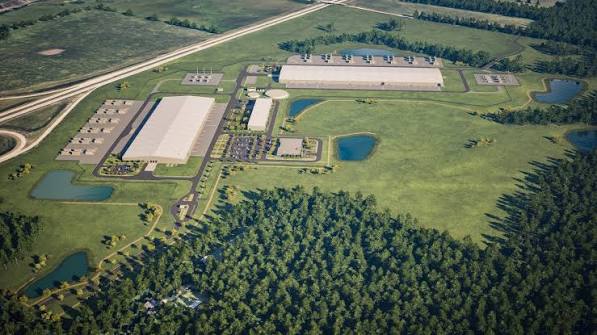
PacifiCorp, Rocky Mountain Power’s parent, says the 45-mile, 345-kilovolt Spanish Fork-to-Mercer line is needed because “current transmission lines in the area are nearing maximum capacity.” The line would run from the Spanish Fork substation in Mapleton to the Mercer substation in southern Eagle Mountain, a 345 kV station built in 2019 to serve the growing region and the Meta data center. PacifiCorp says that without the new line, an outage on the existing double-circuit 345 kV ties between Utah and Salt Lake counties would leave the 138 kV system in Utah Valley short of reliability planning standards, and that energizing Spanish Fork–Mercer would enable 2,950 additional megawatts of renewable energy to connect.
That project is still in planning and design. PacifiCorp’s page, updated Aug. 19, 2026, said the southeastern route was amended in August 2026 for environmental constraints near Utah Lake and that landowners within 500 feet were being notified under a 90-day county requirement. On July 8, 2026, the Utah County Commission approved an ordinance, requested by Rocky Mountain Power, making 345-kilovolt and larger transmission lines a permitted use on unincorporated county land instead of requiring parcel-by-parcel conditional-use permits.
Load is still rising. On Sept. 14, four days before the Eagles Gate outage, Meta announced it is expanding its Eagle Mountain data center, lifting its Utah investment above $3 billion. Meta said it “fully funded new generation and grid infrastructure, helping improve reliability across the Rocky Mountain Power grid,” and that it pays the full cost of its energy use so other customers are not negatively affected.
Whether those investments are reaching neighborhood circuits like Eagles Gate is the open question the Sept. 18 outage leaves. Rocky Mountain Power has not issued a cause finding for that event. The next formal statewide accounting is the 2025 Service Quality Review now sitting at the Public Service Commission. Until the company identifies what failed on Sept. 18 — and whether it was another transformer, another substation trip, or something else — Eagle Mountain residents have a record of large outages, a regulator saying equipment failures are not coming down, and a major transmission fix that is still on paper.