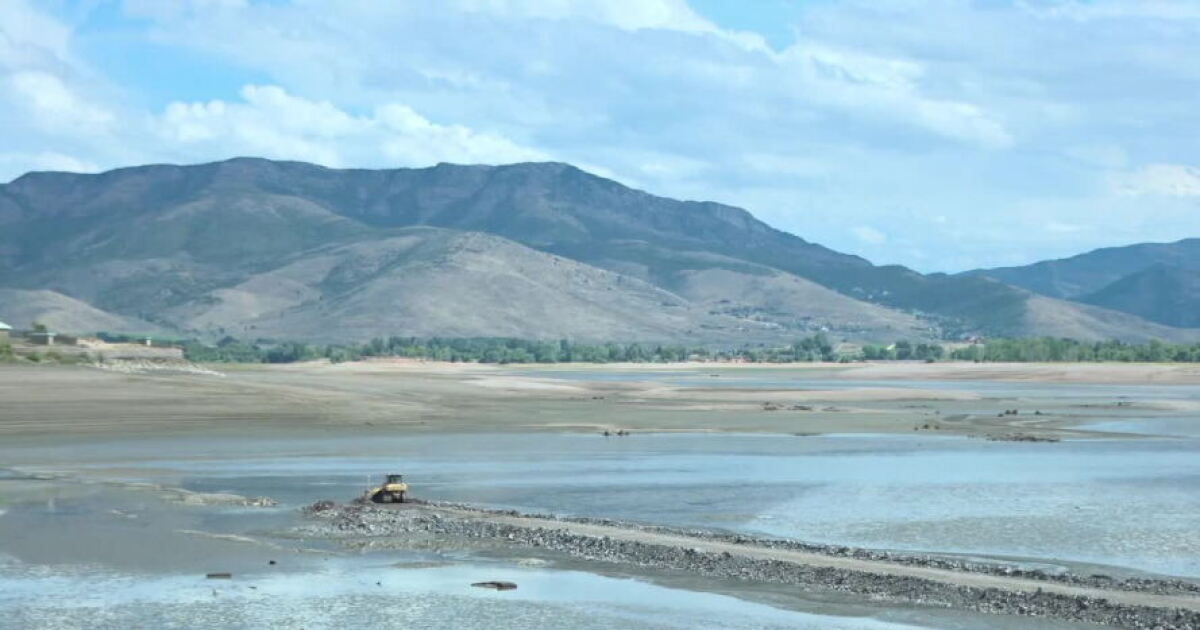
Demonstrators gathered at the Utah State Capitol on Sept. 19, 2026, to protest the development of new data centers, citing fears that industrial expansion will accelerate the depletion of the Great Salt Lake. The protest follows years of environmental tension, including a 2024-01-14 report from the Great Salt Lake's official conditions page noting that the terminal basin's water levels are heavily dependent on precipitation and runoff from the Uinta, Wasatch, and Bear River ranges.
The protests center on the tension between industrial growth and environmental preservation. Advocates argue that the increasing demand for water to support large-scale infrastructure, such as data centers, threatens the stability of the Great Salt Lake. As of Jan. 14, 2024, the Great Salt Lake's water level was already under threat from evaporation and declining runoff, a condition that remains a primary concern for residents of the Wasatch Front.
According to Utah Physicians for Healthy Environment, the shrinking of the lake is not merely an environmental issue but a public health crisis. The organization noted that as the lakebed dries, it exposes sediments laced with arsenic, mercury, and other dangerous substances that can be picked up by wind and inhaled by as many as 2.5 million people living near the lakeshore. Dr. Brian Moench, a physician with the organization, has warned that the lake is on track to disappear within five years if drastic changes are not made.
Critics of rapid industrialization argue that the state must curb water use to prevent the lake's total disappearance, which they claim would be the worst possible outcome for the majority of Utahns. This sentiment was echoed by Dr. Kirtly Parker Jones, who observed that even after rainstorms, windows in Salt Lake City are often covered in grey spots from the dust rising from the drying lakebed.
The economic implications of a drying lake are vast, impacting multiple sectors of the Utah economy. The brine shrimp harvest industry alone brings between $10 million and $60 million to the state annually. Additionally, the snow sport industry, which is highly dependent on the Wasatch mountain snowpack, faces long-term risks linked to the lake's water levels.
Environmental advocates are also focusing on the impact of agricultural water use. While alfalfa farming accounts for only 0.2% of the Utah economy, it consumes approximately 68% of the state's available water. A significant portion of Utah's alfalfa is also exported to China. Utah Physicians for Healthy Environment has called for wholesale changes in water law and measures to decrease water use, including the potential buyout of water-intensive alfalfa farms.
In addition to agriculture, mining operations use substantial amounts of water to suppress dust, such as at the Point of the Mountain. This industrial water usage is a point of contention for groups like Utah Physicians for Healthy Environment, which has opposed controversial mining proposals in areas like Parley's Canyon due to potential environmental impacts.
The history of managing Utah's land and water includes complex state authorities like the Military Installation Development Authority (MIDA). Established by the Utah State Legislature in 2007, MIDA is a state-level governmental authority with the power to manage land use and oversee economic development on underutilized military land. It functions as a quasi-municipal government with the authority to levy taxes and manage land use independently.
MIDA's mission involves facilitating development on military land through the federal Enhanced Use Lease (EUL) law, which allows military installations to lease land to private developers for projects that benefit the military. One such project area, the Utah Data Center Project Area, was created by MIDA in March 2010 to support development at Camp Williams in Utah County.
The state has previously declared states of emergency due to severe drought conditions. On April 21, 2022, Governor Cox issued an executive order declaring a state of emergency after 99.39% of the state experienced severe drought. This followed similar emergency declarations in the spring of 2021.
Legislative and legal battles continue over the management of these resources. Utah Physicians for Healthy Environment has engaged in litigation to compel the state to protect the lake, noting that the current disconnect between state law and the physical limits of the region's growth is becoming increasingly stark. The organization maintains that the state must prioritize public health and the ecosystem over the pursuit of continuous population growth and industrial profit.
Looking Ahead
As the debate over data centers and water rights intensifies, the state continues to monitor critical data through tools like the USGS Streamflow and the Utah Division of Water Resources. The future of the Great Salt Lake remains tied to the decisions made regarding water law, agricultural practices, and the regulation of industrial and mining developments across the state.