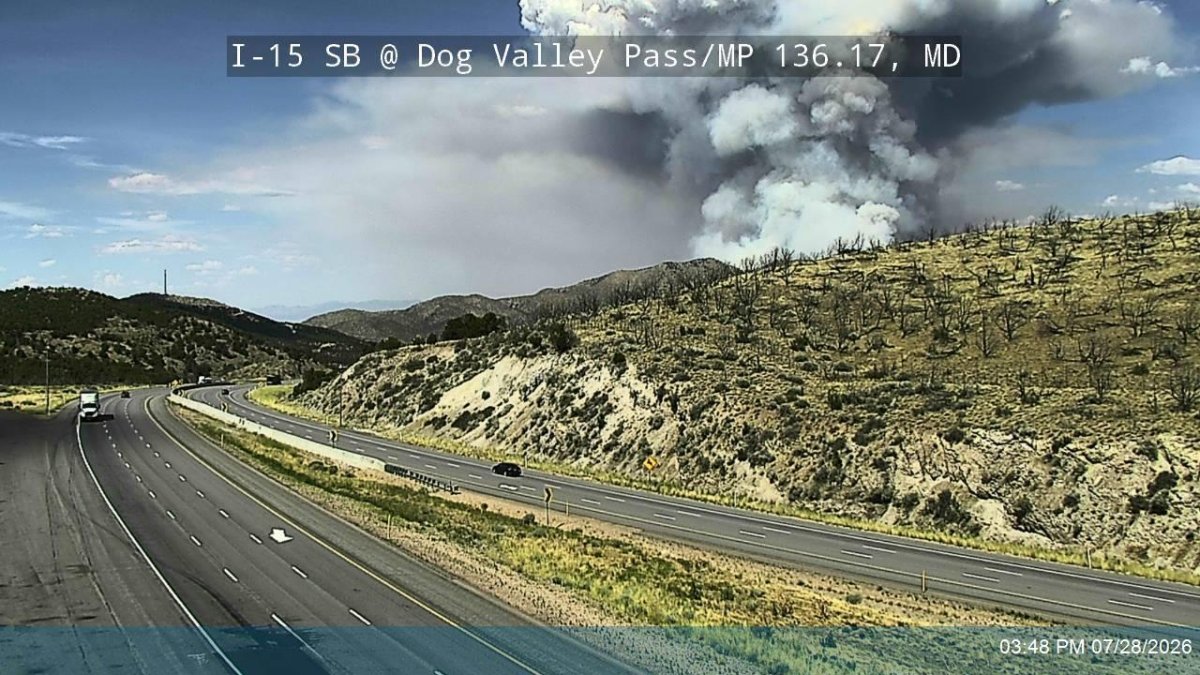
Governor Spencer Cox and U.S. Forest Service Chief Tom Schultz will sign a $18 million funding commitment in Beaver County on Thursday to support recovery efforts for the Cottonwood Fire, a development following months of post-fire assessments in the region. The signing ceremony, scheduled for Aug. 6, 2026, marks a significant milestone in addressing the damage caused by the June wildfires, including the Cottonwood Fire and the active Widemouth 2 Fire.
Funding and Site Visits
The funding commitment, announced by the Governor's office on Aug. 5, 2026, is part of a coordinated response to the environmental and infrastructure damage caused by recent wildfires. The scheduled event in Beaver County includes a formal signing ceremony at the Beaver County Courthouse Commission Chambers, followed by a site visit to a canyon area to view flood mitigation efforts related to the Cottonwood Fire. Following the site visit, officials will visit an impacted residence before concluding the tour in Kanosh.
Post-Fire Scientific Assessments
The focus on the Cottonwood Fire follows intensive scientific evaluations initiated by the U.S. Forest Service. On July 14, 2026, the Forest Service announced that Burned Area Emergency Response (BAER) teams had begun soil burn evaluation for both the Cottonwood and Wild Goose Fires. These teams were tasked with creating soil burn severity reports to identify risks from potential flooding and debris flows to National Forest System lands.
Assessing Environmental Risks
The BAER teams, composed of specialists including hydrologists, soil scientists, road engineers, botanists, archaeologists, and geographic information specialists, use satellite imagery and field data to analyze fire effects. Their goal is to produce erosion potential and debris-flow maps to model post-fire flows. These assessments are critical because the more severe a fire's impact on soil, the higher the likelihood of erosion during subsequent rainstorms, particularly on steep slopes.
Managing Wildland-Urban Interface Risks
The recovery efforts are part of a broader state and federal initiative to manage the risks within the wildland-urban interface (WUI). The WUI is defined as the zone where human development meets undeveloped wildland or vegetative fuels, creating high-risk conditions for life and property. The Utah Division of Forestry, Fire and State Lands emphasizes that safety in these zones is a shared responsibility between citizens, developers, and various levels of government.
Community Preparedness Strategies
To mitigate these risks, the state encourages the development of Community Wildfire Preparedness Plans (CWPPs). These plans are essential tools that outline strategies to address wildfire risks through collaborative planning involving local governments, fire departments, and the Utah Division of Forestry, Fire and State Lands. Under the Healthy Forests Restoration Act (HFRA), communities that develop these plans may receive additional benefits and increased access to federal funding for hazardous fuel reduction projects.
Addressing Active Wildfires
The current recovery efforts for the Cottonwood Fire coincide with active firefighting operations for the Widemouth 2 Fire. As part of the Aug. 6 itinerary, local leaders will participate in a roundtable briefing in Millard County to discuss the response to the Widemouth 2 Fire. Attendees for the briefing include Incident Commander Tony Demasters, the Millard County Sheriff, and several local mayors from Kanosh, Fillmore, and Meadow City.
Recovery Outlook
The multi-county site visit is intended to provide a comprehensive view of both the immediate fire response and the long-term recovery needs. Officials warned that due to unstable weather conditions in the area, participants should prepare for muddy conditions, heat, and possible rain during the field tours.