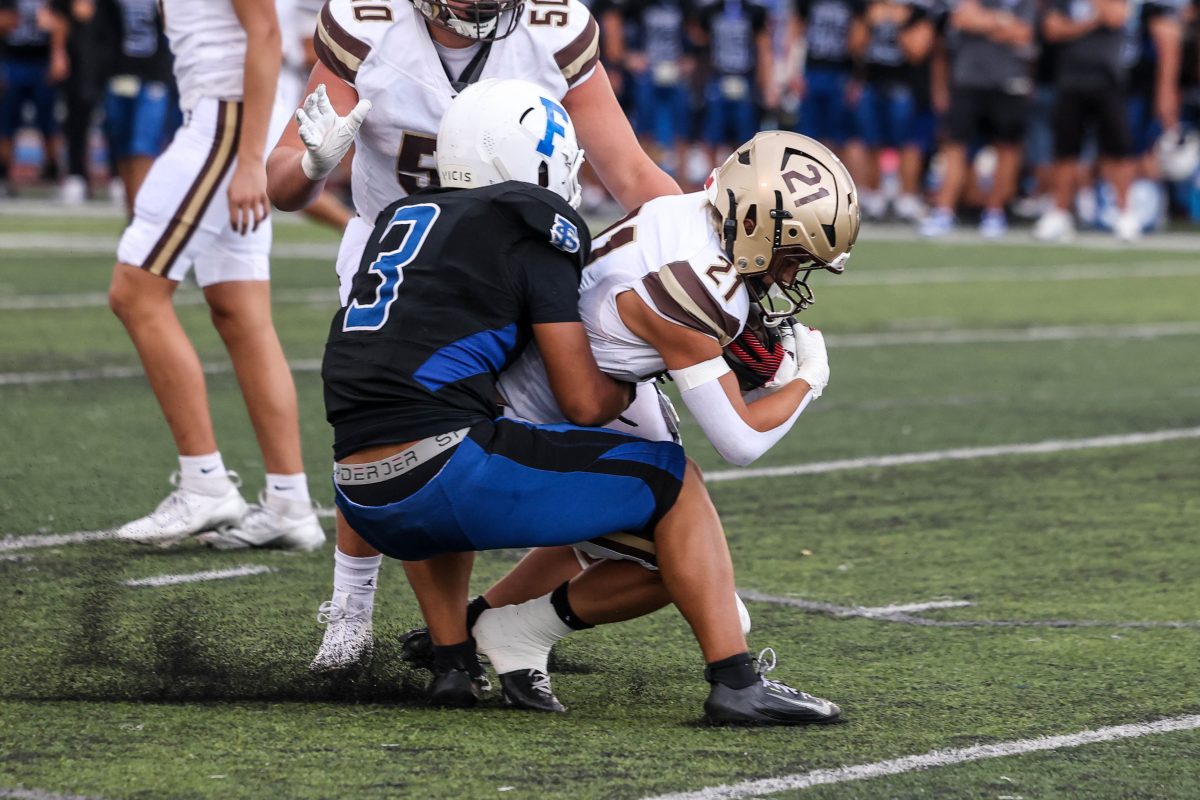
Black rubber pellets from the infill of synthetic sports fields are frequently seen spraying from the surface during athletic play across Northern Utah. These granules, made from recycled vehicle tires, are spread between artificial turf fibers to provide cushioning, improve shock absorption, and help keep the synthetic grass blades standing upright.
The Weber School District serviced the football fields at Bonneville, Weber, Fremont, West Field, and Roy at the beginning of August before the first games were played. Maintenance included a deep cleansing of the turf involving brushing, fixing seams, and performing a decompaction of the infill, according to Weber School District secondary education supervisor Rob Lake.
While most schools in the district use rubber infill, Roy High School opted for a "brock" fill made of pine wood. This choice was made to mitigate the heat generated on artificial surfaces, as wood chips are intended to keep fields approximately 30 to 40 degrees cooler than rubber. Additionally, the wood chips absorb water, whereas rubber can create muggy and humid conditions during hot months.
The district's switch to artificial surfaces was driven by high usage from football, soccer, and lacrosse, as well as the desire to reduce costs associated with mowing and painting grass fields. Lane Findlay, a community relations spokesman for the Weber School District, noted that the turf provides significant water savings, estimated at 800,000 to 1.5 million gallons per year. These savings have been notable during extreme droughts in Utah when the district faced strict restrictions on watering athletic fields.
The lifespan for the synthetic turf is expected to be 10 years, while the underlying pad has an estimated 20-year lifespan. Most of the district's grass fields—Bonneville, Weber, and Fremont—were replaced seven years ago, while Roy was replaced six years ago. West Field received its initial installation three years ago when the school was built.