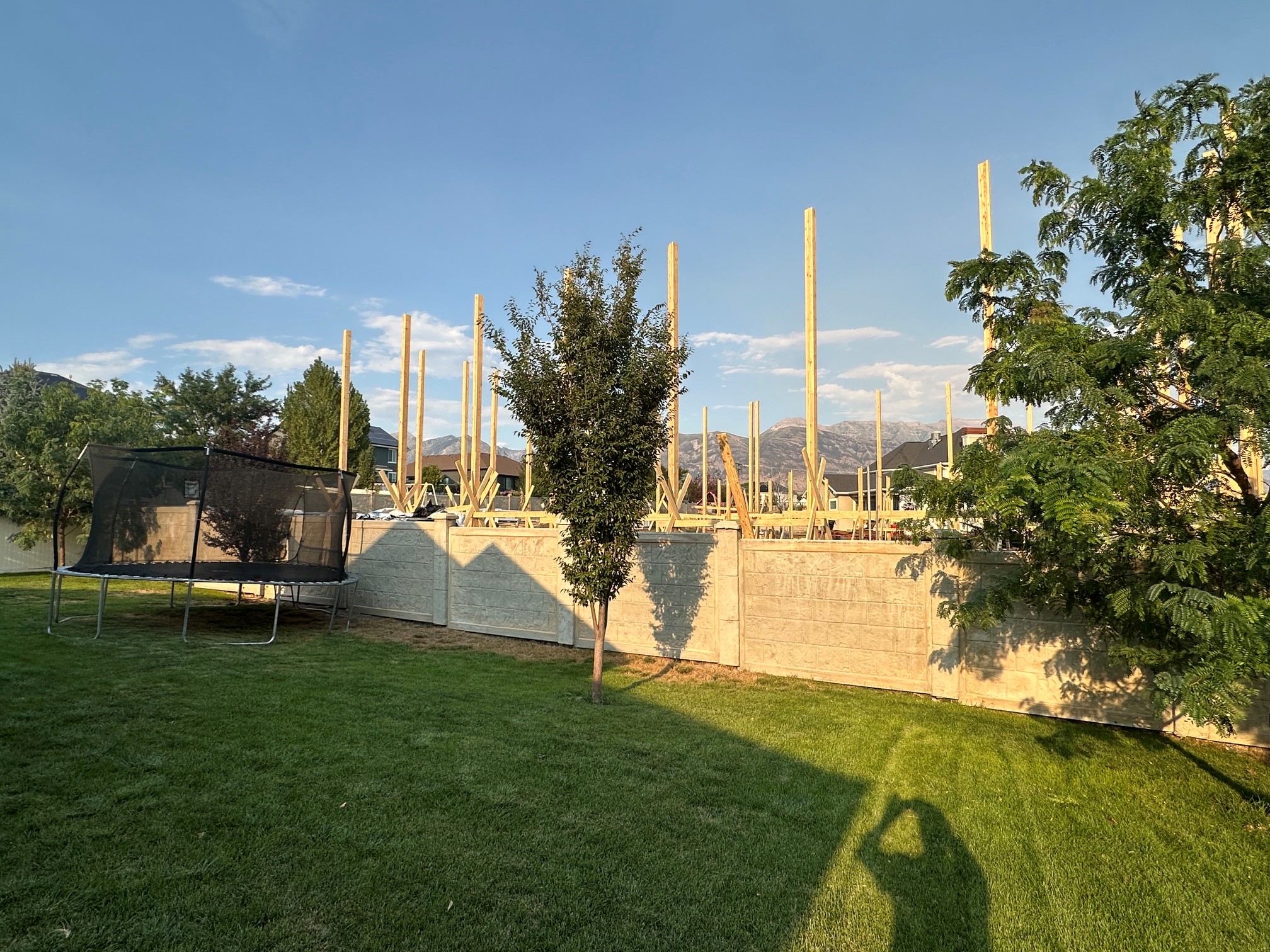
No code-enforcement citations have been issued against the backyard building rising on the Lehi–American Fork city line, because American Fork records show the city already approved it. The Development Review Committee voted unanimously on April 6, 2026, to approve the Rovig Residential Accessory Structure site plan at about 731 North 900 West, finding it met municipal code, and the 12-minute meeting drew no public comments.
Utah County lists the same parcel, 13:002:0183, as 715 North 900 West in American Fork, a 1.98-acre lot owned since April 1, 2021, by Todd Baxter. The 2026 assessed market value is $1,382,800, including $162,400 in agricultural land value. The site-plan applicant was Reece Rovig of Roper Buildings. Neighbors have described the project as a barn or garage about 35 feet tall and more than 11,000 square feet; the city’s April agenda listed it only as an accessory structure larger than 750 square feet on an RA-1 Residential Agricultural lot.
How a 12-minute committee approved it
American Fork’s Development Review Committee met at 9 a.m. April 6 at the Public Works Building, 275 East 200 North. Members present were Development Services Director Patrick O’Brien, Public Works Director Sam Kelly, and Fire Capt. Jordan Hendrickson. Planner II Cody Opperman told the committee the building exceeded the 750-square-foot threshold that sends accessory structures to the DRC, and that the applicant had recorded a covenant promising not to use it as a residence. Fire Marshal Mat Sacco said the size and placement could make parts of the site hard to reach and that a sprinkler system had been discussed; he also noted a restroom in the plans, meaning water would already be in the building if sprinklers were required.
The staff report found the application met Section 17.5.105 (accessory buildings) and Section 17.5.106, which states that “living and sleeping quarters shall not be permitted in any accessory building.” The only listed condition of approval was that fire flow still had to be verified under International Fire Code Section 507, with a possible NFPA 13D sprinkler system to be resolved on the building plans. Kelly moved to approve; O’Brien seconded; O’Brien, Kelly, and Hendrickson all voted aye. The meeting adjourned at 9:12 a.m. The DRC is the city’s administrative land-use authority for accessory-building site plans; it can approve a project without sending it to the Planning Commission or City Council if staff finds the application meets code.
What the 2024 code allows — and what it no longer requires
The rules that governed this approval were rewritten in Ordinance 2024-06-28, passed June 11, 2024, and signed by Mayor Brad Frost. In RA-1, an accessory building may be 35 feet tall, must sit at least 5 feet from an interior side or rear lot line, and its footprint may not cover more than 25 percent of the rear yard. A building permit is required above 200 square feet, and engineered civil plans are required above 750 square feet. In ordinary residential zones the height cap is 25 feet, dropping to 20 feet within 10 feet of a property line — a limit that does not apply in RA-1.
Before that ordinance, American Fork required Planning Commission approval for accessory buildings of 1,000 square feet or larger, including a finding that the building would not cause “an undue negative impact upon adjacent properties.” The 2024 rewrite repealed those zone-by-zone size rules, dropped the Planning Commission compatibility finding, and assigned site-plan approval to the administrative land-use authority. Utah law does not require mailed notice to adjacent owners unless a city writes that requirement into its own ordinance; the city posted the April 6 agenda on the Utah Public Notice Website.
Lehi’s own accessory-building rules, which do not govern this American Fork lot, cap most residential accessory buildings at 24 feet and require an 8-foot side and rear setback once height exceeds 24 feet. On larger Lehi RA-1 lots, height may reach 35 feet. The practical effect on this fence line is that Lehi backyards now face a building built to American Fork’s agricultural-residential standard.
Neighbors’ window, and what happens next
Lehi homeowner Dale Stewart, whose yard backs to the project, told KSL he and neighbors had no notice before beams went up on the morning of Aug. 20. Tracy Stewart said she “was sobbing as it just kept getting bigger and bigger.” Charlee Carn said the building sitting against their fences would take “all of our sunlight.” FOX 13 reported Stewart has lived there about 10 years, later learned of an appeal period he said no one knew about, and asked the city to look at what is reasonable; the station said Frost would not speak on camera until after a review and that a person constructing the building declined to comment.
Stewart spoke at the American Fork City Council meeting on Aug. 25. Frost said he was just learning of the project and would review the submissions, but that construction could continue if it matches the approved plans and city requirements. Under the accessory-building ordinance, an applicant has 10 days to appeal a denial to the Planning Commission; the Planning Commission, not the City Council, is the appeal authority named in the staff report. State law requires cities to set an administrative appeal window of not less than 10 days and, unless an ordinance sets a longer period, defaults that window to 10 calendar days.
A search of the April 6 minutes, the staff report, and Utah County records found no variance, no denial, and no enforcement citation. The remaining city checkpoints are the building permit and the fire-flow/sprinkler review still listed as a condition, not a stop-work order.