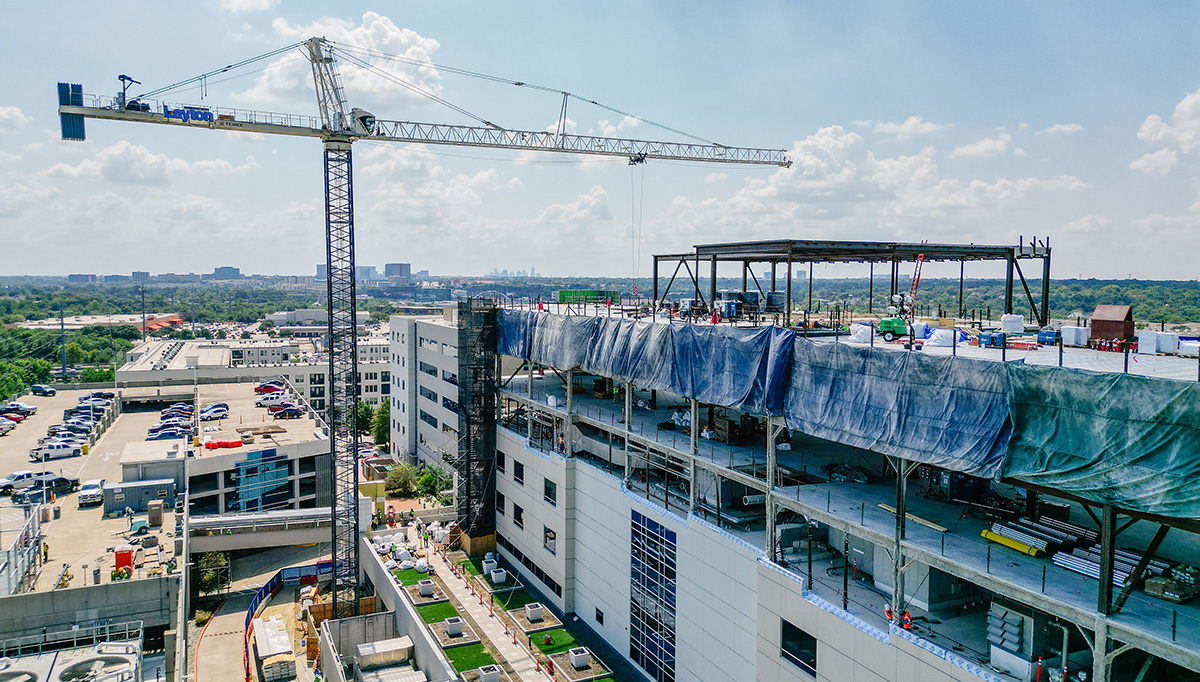
Layton Construction is specializing in high-stakes vertical hospital expansions, a complex construction method required by increasing land scarcity and aging populations. The Salt Lake City-based firm manages these projects by working directly above active medical facilities, requiring strict infection control and logistical planning to ensure patient safety and uninterrupted medical services.
The Complexity of Building Up
Vertical hospital expansions involve building upward on or around existing structures that cannot be shut down for any period. This process requires demolishing parts of the existing building envelope while maintaining the security and integrity of the remaining structure. According to Layton Construction, this type of work is among the most demanding in the industry due to the high stakes involved in maintaining a sterile environment for patients.
Project Manager Mitchell Koch described the complexity of these projects as being like "assembling the greatest Lego set ever, but with incrediblyly high stakes." The process requires significant logistical planning, starting with early meetings between construction teams, architects, and design consultants to address the unique challenges of each site.
Matching Old and New Systems
The difficulty of these projects varies depending on the age of the existing facility. While some projects involve adding to a building the contractor originally constructed, others involve working on much older structures. For example, adding to a building from 2022 presents different challenges than adding to one originally built in 1958.
When working on older buildings, teams must match new materials to existing ones to ensure the facade blends seamlessly. This includes sourcing specific types of brick and matching glazing to account for expected weathering and wear and tear on the existing exterior. Additionally, teams must navigate changing energy codes and ensure new utilities and systems connect properly with older designs.
Prioritizing Patient Safety
Safety protocols are critical when construction occurs above occupied spaces. Because construction can stir dust and disrupt airflow, which may release contaminants, teams utilize Infection Control Risk Assessment, or ICRA. This tool allows construction and healthcare teams to assess hazards and apply mitigation measures before work begins.
Senior Superintendent John Lopez noted that these measures are vital for protecting patients and staff. One specific technique involves redirecting air intake to prevent dust from being sucked into the hospital and dispersed through the facility. This is particularly important given that a recent CDC report indicated one in 31 hospital patients has at least one healthcare-associated infection.
Uninterrupted Medical Services
The success of these projects often depends on the level of coordination with hospital staff. Mitchell Koch noted that at West Marion Community Hospital in Ocala, the expansion included a two-story vertical addition and two horizontal tie-ins connected to the operating room and the sterile processing department.
Through close coordination, the West Marion project saw zero interruptions to patient care over its two-year duration. The hospital was able to continue performing surgeries and seeing patients on the rehab floor below without halting the sterilization or cleaning of equipment.
Advancing Prefabrication Methods
In addition to vertical expansions, Layton Construction has utilized advanced prefabrication techniques to improve efficiency in hospital construction. During the construction of the Retama Park Community Hospital in Selma, Texas, the firm utilized 7,000 prefabricated components.
This approach, which included the use of robotics to print floor plans on concrete, resulted in 173,000 labor hours being shifted off-site and a 9% reduction in the project schedule.
Company Background
Layton Construction, headquartered in Salt Lake City, Utah, has been performing vertical expansions since 2000, with nearly 40 such projects in its portfolio. The firm operates from 16 strategic offices across the United States and employs more than 1,700 professionals across various sectors, including healthcare, education, and commercial office construction.